

How Dr. Patrick Porter Built "BrainTap" to Retrain the Mind for Personal Growth and High- Performance
When was the last time you woke up feeling truly rested, with a clear mind and enough energy to carry you through the day?
For many people, that feeling has become increasingly difficult to find. Between demanding schedules, constant digital stimulation, and restless nights, recovery often takes a back seat to everything else. Yet in a wellness culture increasingly focused on optimizing performance, an important question remains: Are we giving our brains enough opportunity to recover?
For Dr. Patrick Porter, that question became central to a decades-long pursuit that began long before brain fitness became part of today's conversation.
Growing up around his father's Silva Method seminars, Porter developed an early fascination with how sound could influence mental states. That curiosity eventually led him to a small office, where he and five colleagues assembled portable light-and-sound machines using components from Radio Shack.
Their invention entered a world largely unfamiliar with the technology, leaving Porter with a challenge that would shape his entrepreneurial journey.
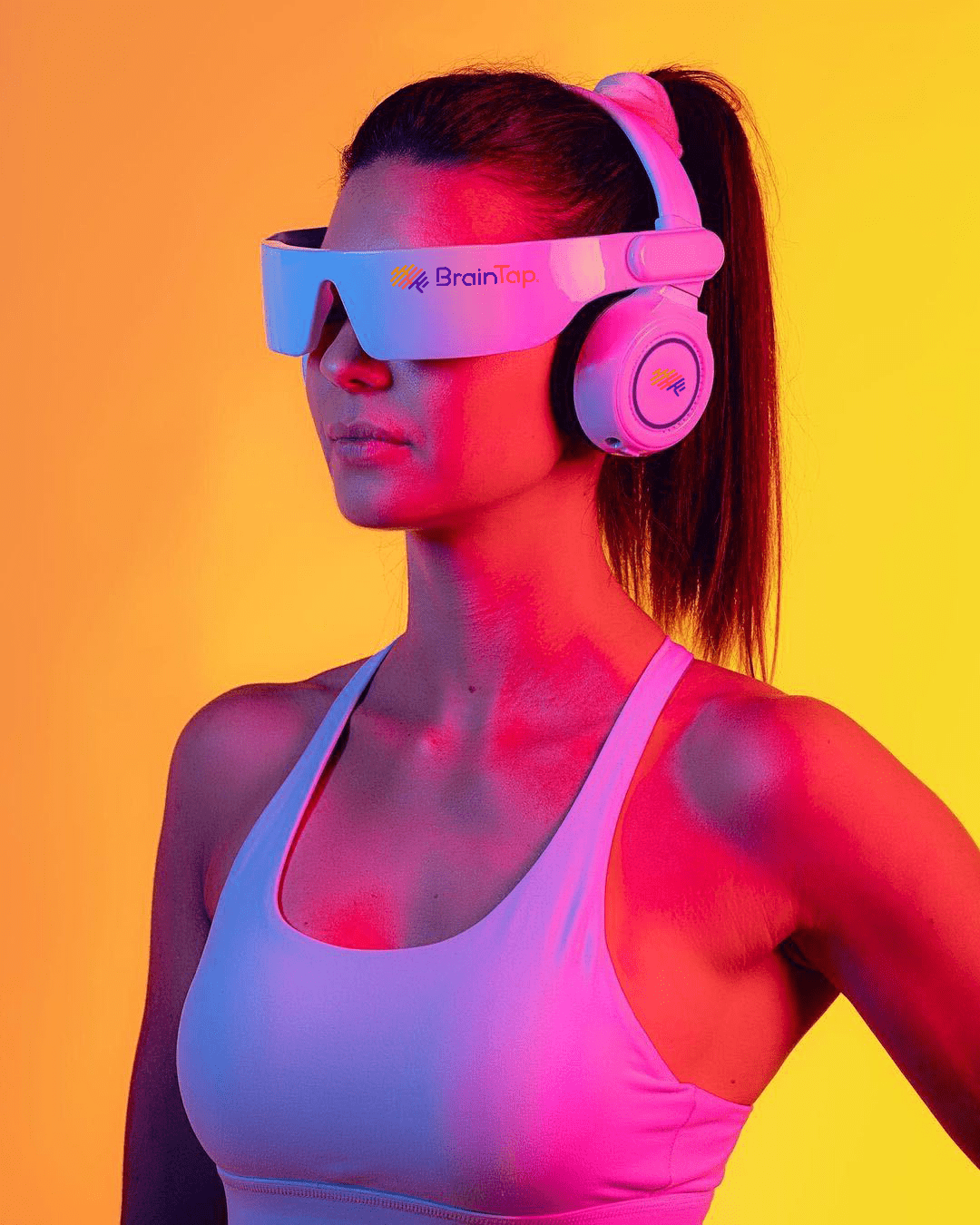
A few months after interviewing Dr. Porter for this article, I attended the Ultimate Wellness Conference in September 2026 to cover the event and extract more inspirational MBNews interviews. During the event, I became the lucky owner of a BrainTap headset. I won the device during the VIP party, which gave me the chance to experience the technology firsthand and better understand what Dr. Porter had created beyond simply speaking with him about it. And once I started using it more, I realized the part of BrainTap I had understood least was actually how much it was designed to do beyond just mental recovery.
BrainTap Goes Beyond Recovery

What became more interesting to me after spending time with BrainTap was realizing how broad the platform actually is.
What stood out to me once I began using BrainTap was how much broader the platform was than I first assumed. Beyond recovery and stress support, the program library includes sessions focused on resilience, confidence, mindset, professional performance, personal growth, and themes around abundance and success.
That wider range changes how BrainTap can fit into someone’s daily life.
For entrepreneurs like us or as a high performer, the value is not necessarily in using it only when stress becomes overwhelming. It can also become part of a more intentional routine for how you prepare yourself mentally for the day ahead.
A morning session, for example, may give someone a structured moment to slow down, focus, and engage with guided suggestions before the demands of work begin. Depending on the program selected, that could mean starting the day with language centered around confidence, resilience, focus, or a more constructive mindset.
What I find compelling about that approach is the consistency behind it.
Entrepreneurs are constantly exposed to pressure, uncertainty, decisions, setbacks, and information. Most of us spend a lot of time thinking about how to improve our strategy, productivity, or performance, but much less time considering the mental patterns we are reinforcing every day.
BrainTap’s broader philosophy seems to sit in that space.
Rather than treating recovery as the end goal, the platform presents recovery, mindset, and mental conditioning as parts of the same process. The intention is to create time for the nervous system to settle while also engaging with guided content designed around the way someone wants to think, respond, and show up.
I noticed that using it during the day could leave me feeling more rested, while the sleep-focused programs became a way to wind down more intentionally at night.
The more I used it, the more curious I became about the thinking behind the device itself. What I discovered was that many of the ideas behind the technology began long before the device existed, rooted in Dr. Porter’s early exposure to meditation, visualization, and mental training through his father’s work.
His Father's Work Sparked a Lifelong Fascination With the Brain
Long before Dr. Patrick Porter began developing brain fitness technology, he was learning about the mind through an unlikely classroom: his father's seminars.
His father was an instructor of the Silva Method, a personal development program that incorporated meditation, visualization, and techniques intended to improve mental focus. As a child, Porter became familiar with the Silva Sound, a rhythmic audio technique used during these sessions.
"So I grew up with something called the Silva Sound," Porter recalled.
His involvement began with simple responsibilities, such as arranging chairs and preparing the room for participants. Over time, he progressed from assisting behind the scenes to presenting alongside his father. These experiences gave him an early introduction to the relationship between sound, relaxation, and the ways people might learn to influence their mental states.
As his interests developed, Porter pursued an education in electronics, acquiring the technical skills that would eventually allow him to explore those ideas through physical devices.
A pivotal opportunity arrived when he joined a company called Light and Sound Research. There, he encountered a team interested in developing portable technology that combined sensory stimulation with the principles he had encountered growing up.
For Porter, the connection between his childhood experiences and his technical education opened a new direction. The concepts he had observed in seminar rooms could now be explored through electronic equipment.
Yet developing the technology was only the beginning. The team still had to determine how to bring an unfamiliar concept into people's everyday lives.
From Early Experiments to a New Approach to Brain Fitness

Inside a modest office, Porter and five colleagues began assembling what he describes as the first portable light-and-sound machine, using electronic components they purchased and soldered together themselves.
"We built them in my office from a store called Radio Shack," Porter recalled.
Their early devices combined rhythmic sound with flickering lights, drawing on principles Porter had encountered through his father's seminars. The goal was to explore whether these sensory experiences could help people enter mental states associated with relaxation and focus.
What began as a small technical operation eventually developed into a franchise business that operated for 27 years. Porter sold the company in 2002, but his interest in the technology continued. By 2012, he and his wife had decided to revisit the concept, incorporating newer developments into a more accessible device.
That decision marked an important stage in the evolution of BrainTap.
The technology expanded beyond its original combination of light and sound to incorporate guided visualization, carefully timed audio frequencies, and sensory stimulation delivered through a headset. Its sessions are designed to encourage different mental states throughout the day, from morning alertness to afternoon relaxation and preparation for sleep.
For Porter, the innovation was closely connected to something he believed the growing biohacking movement often overlooked: the importance of recovery itself.
"It's not about all you can do. It's about how are you recovering after all that you do," he explained.
While biohacking enthusiasts often measure progress through physical output, demanding routines, and performance metrics, Porter emphasizes the time the brain and nervous system spend recovering afterward. In his view, learning to move away from prolonged states of heightened alertness and toward relaxation is essential to maintaining resilience.
This philosophy became central to BrainTap's development. Porter wanted to make intentional recovery a practical part of everyday life, with sessions designed around the natural transitions between activity, rest, and sleep.
Yet transforming an experimental technology into something people could understand, trust, and consistently use presented a very different challenge. Porter would soon discover that developing the device was only one part of building a sustainable business around it.
The Early Setbacks That Paved the Way for BrainTap's Growth
Developing a new technology was one challenge. Convincing people to trust something they had never encountered was another.
During the 1980s, Porter began operating smoking cessation clinics using an early version of his light-and-sound technology, then known as MC Square. At a time when cassette tapes were still commonplace and portable brain-training devices were largely unfamiliar, explaining the equipment often proved more complicated than explaining the problem it was intended to address.
"We were like aliens from another planet," Porter recalled.
He soon recognized that people seeking help with smoking cessation were more interested in the possibility of changing their habits than in understanding the electronic equipment behind his approach. Rather than lead with the technology, he began communicating the intended benefits of the experience.
That realization shaped how he introduced his work to new audiences, but growing the business presented challenges that marketing alone could not resolve.
Over the years, Porter encountered difficult professional relationships and learned the consequences of placing too much responsibility in the hands of outside experts. He acknowledged that his desire to find someone who could resolve a business problem sometimes led him to surrender more control than he should have.
"You can find partners to work with, but don't give the keys to your car to somebody else," he explained.
The experience changed how he approached collaboration. Porter came to believe that entrepreneurs needed to remain actively involved in their operations, even when working alongside experienced professionals.
He also became increasingly focused on gathering evidence to support the technology's value, recognizing that personal conviction would only carry an unfamiliar innovation so far.
For Porter, building BrainTap meant learning how to communicate its purpose, protect the business behind it, and give people reasons to evaluate the technology for themselves.
Those lessons would eventually influence how BrainTap approached research, professional partnerships, and the growing community using its products.
Marking BrainTap's Rise in the Wellness Industry

For Dr. Patrick Porter, believing in BrainTap was never going to be enough to establish its credibility. After years of introducing unfamiliar technology to the public, he understood that building confidence among healthcare professionals required something more substantial: measurable results.
"So I started early on doing studies, proving it out, showing that it would work, getting evidence that could not be refuted," Porter explained.
“Saving Your Brain” is a book on a brain-training approach involving sensorimotor rhythm (SMR), a pattern of brain activity associated with sensorimotor regulation and studied in neurofeedback research. Porter described a program that incorporated morning, afternoon, and evening sessions intended to support different states of alertness and rest.
He reported that participants initially scoring within a dementia-related assessment range improved enough to fall outside that range in less than six weeks. The project is associated with Saving Your Brain, a book by Dr. Kelly Miller.
The reported outcome is notable, but its clinical significance remains uncertain without independently verifiable study data. A change in an assessment score does not necessarily establish that dementia has been reversed or that a particular intervention can treat the underlying condition.
BrainTap's growing reach has brought further attention to the scientific questions surrounding audiovisual brainwave entrainment, a technique that uses rhythmic sensory stimulation to influence patterns of brain activity.
A published pilot study involving healthcare students reported encouraging changes in sleep quality, mood, and stress-related measures following auditory brainwave entrainment sessions. However, the researchers acknowledged methodological limitations and called for larger randomized controlled trials to determine how reliably these findings could be reproduced.
Porter also described an ongoing research project in Brazil examining BrainTap's potential role in postoperative opioid use. Although he reported promising early observations, the study was unpublished at the time of the interview, making its findings preliminary and unsuitable for drawing conclusions about treatment effectiveness.
Alongside these research efforts, BrainTap has reported expanding adoption. During his interview with MBNews, Porter stated that approximately 3,000 clinics were using BrainTap programs and that the platform had reached 120,000 users.
In its 2025 year-end report, the company also announced more than 2.2 million completed sessions, representing approximately 46.6 million minutes of listening.
These milestones reflect growing engagement with BrainTap, while the research raises an important question for healthcare professionals…
Can emerging brain fitness technologies demonstrate meaningful and reproducible benefits for recovery, resilience, and long-term well-being?
For Porter, answering that question remains part of the work.
The Bigger Vision Behind BrainTap's Approach to Wellness
After decades of developing technology, navigating business challenges, and working with wellness professionals, Dr. Patrick Porter has come to recognize a principle that extends beyond BrainTap: meaningful innovation begins with understanding the people it is intended to serve.
"What are you really solving out there, and then how can you tell the story how you have your device that's going to work?" Porter asked.
For practitioners introducing new approaches to patient care, that question carries particular significance. As interest in preventive wellness and personalized health technologies expands, professionals face the responsibility of determining which innovations offer practical value, how they fit into existing care models, and whether their benefits are supported by credible evidence.
Porter's broader philosophy is explored in Brain Fitness Blueprint: Integrating Ancient Wisdom and Modern Technologies for Peak Performance, co-authored with Ruchika Sikri and published by Hay House.
The book extends his vision beyond BrainTap itself, emphasizing how everyday lifestyle choices may support a healthier relationship with the demands placed on the brain.
At the center of that philosophy is the belief that modern life requires a more intentional approach to brain fitness. Porter argues that the human brain developed under conditions far different from today's environment of prolonged screen exposure, disrupted sleep schedules, sedentary routines, and constant stimulation.
His proposed approach encourages people to reconsider how they begin their mornings, manage their energy throughout the afternoon, and prepare for restorative sleep at night. Movement, breathing, nutrition, stress management, and recovery all contribute to the lifestyle framework he advocates.
For Porter, brain fitness is an ongoing practice that reaches beyond any single device or wellness intervention.
His vision has also influenced the way BrainTap engages healthcare professionals. Through its BrainCamp program in North Carolina, Porter has welcomed practitioners to experience the company's technologies and explore their potential applications within wellness settings. He described plans to expand that experience into a retreat environment accessible to a broader audience.
For wellness entrepreneurs, his journey offers another lesson about building something that lasts. Innovation requires continued learning, the willingness to reassess familiar approaches, and an understanding that a promising idea must evolve alongside the needs of the people it serves.
Porter's experience reflects a larger opportunity for the integrative healthcare community: to explore emerging approaches collaboratively, evaluate them with scientific rigor, and develop practices that place long-term well-being at the center of care.
Where Brain Fitness Becomes Part of Everyday Wellness
What began with a young boy helping his father prepare seminar rooms has grown into a decades-long pursuit of understanding how people can better support their mental well-being.
For Dr. Patrick Porter, each stage of that journey has brought new questions, from the possibilities of light-and-sound technology to the role recovery might play in an increasingly demanding world.
His work with BrainTap and the philosophy explored in Brain Fitness Blueprint reflect a conviction that caring for the brain deserves the same attention people devote to physical conditioning.
As research into brain fitness and sensory-based wellness technologies continues to develop, questions about their effectiveness and appropriate applications remain important. For healthcare professionals, the opportunity lies in exploring these innovations thoughtfully, guided by evidence and a commitment to the people they serve.
Perhaps Porter's most thought-provoking contribution to the biohacking conversation is his emphasis on restoration. In a culture that celebrates doing more, training harder, and achieving greater performance, he invites people to consider whether they have made enough room for recovery.
If we dedicate so much attention to strengthening our bodies, how much thought are we giving to the recovery of our minds?
Interested in exploring Dr. Porter's approach to brain fitness? Visit BrainTap to learn more about the technology and the vision behind it.
Are you a healthcare professional or wellness innovator helping shape the future of holistic health? Apply here and share your story with the MBNews community.