Dr. Peter Goldman on Revolutionizing Chiropractic Care: Going beyond simple neck and back pain, to Healing Systemic Conditions
When a Profession Shrinks Its Own Potential
If you ask most people what chiropractors do, the answer is simple. They treat neck pain. They fix back pain. They help with headaches.
That perception is not wrong. It is just incomplete.
When chiropractic was founded in 1895, it was not introduced as a back pain specialty. The original idea was that when the spine is aligned properly, nerve flow improves. When nerve flow improves, the body functions better. That meant digestion, circulation, glandular balance, and overall health.
Over time, the profession shifted. What began as a system focused on whole-body healing became known primarily for musculoskeletal complaints.
Dr. Peter Goldman believes that the shift was not small. It changed the identity of the profession.
After more than two decades in practice, and after watching patients travel across the world to see him for systemic conditions, he made a decision. He could continue being the one doctor people searched for internationally. Or he could teach other practitioners how to expand what they believed was possible.
That decision became the Zone School of Healing.
Before we get into the school itself, we have to understand how his thinking developed.
Growing Up Around Natural Healing
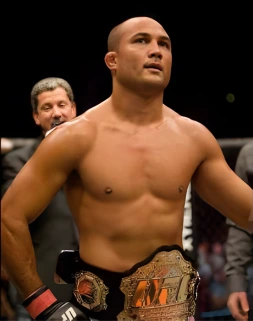
Dr. Peter Goldman did not grow up in a household that relied on conventional medicine as the default. He was raised in Brooklyn, New York, during a time he describes as tough and demanding. He became athletic early, later fighting competitively around the world. Discipline and resilience shaped him long before he entered healthcare.
At home, however, healing looked very different from what most families experienced.
“We had three doctors when I was a little kid… we had a homeopath, like a really good homeopath. We had a great chiropractor, and we had a great naturopath,” he stated.
Natural care was not an alternative approach in his household. It was simply how things were done. If he or his sister felt unwell, his mother would bring out a reflexology chart and work on their feet. That was normal.
Even with that background, chiropractic was not his obvious career path. He earned an economics degree from Brandeis University and returned to New York to work in business. His world was analytical, competitive, and fast-paced.
The shift came from someone he had trusted since childhood.
“I was really inspired by my chiropractor, who had been my chiropractor since childhood. And I was like, " Oh, I'm going to do this,”
That moment redirected his trajectory. He entered chiropractic school in the 1990s. But what he would eventually build would go far beyond the narrow definition most people now associate with chiropractic care.
Why Modern Chiropractic Shifted Away From Systemic Healing
Most people today associate chiropractic with neck pain, back pain, and posture correction. Walk into nearly any chiropractic office, and the waiting room reflects that focus. Patients are there for musculoskeletal complaints. That has become the identity of the profession.
But according to Dr. Goldman, that was never the original mission.
When chiropractic began in 1895, it was designed around a very different premise. The founder believed that aligning the spine restored proper nerve flow, which in turn supported the organs. The goal was systemic healing, not symptom management.
“Chiropractic was actually made to heal digestion and glands and circulation,” he explained. “If someone had high blood pressure, they would get adjusted, and their blood pressure would normalize. Or if someone had period cramps, they would get adjusted, and they would not have period cramps.”
He often references the founder’s 1910 textbook, a volume of over one thousand pages. Of those pages, only a handful address neck and back pain.
“Of 1,000 plus pages, like five of the pages are about neck and back pain. He literally is like, "Chiropractic is to heal the organs. Oh, and by the way, if someone’s neck or back hurts, it could be helpful,” he pointed out.
Somewhere between 1895 and today, the emphasis flipped. What was originally intended as a systemic healing philosophy became largely confined to structural pain relief.
Dr. Goldman did not set out to criticize chiropractors. In fact, he acknowledges that many are highly competent in musculoskeletal care. But he believes the profession narrowed itself over time, leaving its original scope behind.
That realization shaped his own practice. He chose to build around the original intent rather than the modern trend.
And the results began to draw attention.
The Practice That Drew Patients Across the World
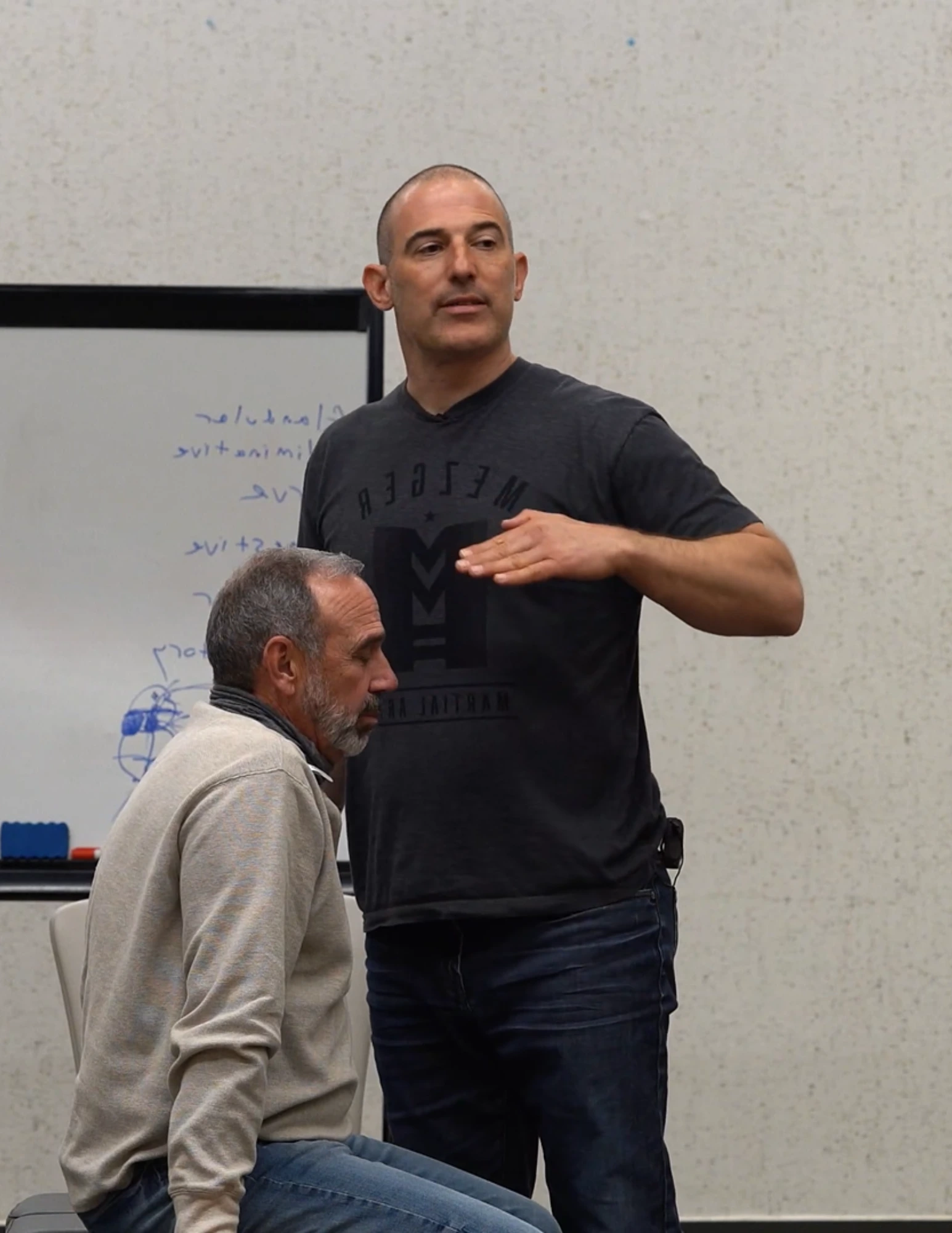
When Dr. Goldman opened his practice in the mid-1990s, he did not position himself as a back pain specialist. His waiting room looked very different from the average chiropractic office.
Patients were not coming in for stiff necks or sports injuries. They were coming in with endometriosis, irritable bowel syndrome, thyroid disorders, high blood pressure, irregular heartbeats, and autoimmune challenges.
And he was not using machines, supplements, or complex protocols.
“Just with my hands. That’s it. A flat bench and my hands, no machines, no equipment, no herbs, no vitamins, no acupuncture needles, just my hands and a two- to three-minute adjustment,” he explained.
Over time, something unusual began to happen. Patients were not only improving. They were traveling.
By 2017, people were flying in from more than thirty cities around the world. Chicago. Guam. Hawaii. South Korea. Vietnam. Germany. Holland. Some traveled internationally. Others drove long distances regularly.
He and his assistant once calculated that more than two hundred patients were driving four hours each way for care.
“That means these people are driving eight hours a day for three minutes with me,” he said. Then he paused before adding, “But when you’re getting off dialysis, it’s worth it, isn’t it?”
The pattern became impossible to ignore. If people from across the country and across oceans were coming to one practitioner for systemic healing, something about the approach was different.
That was the turning point, but instead of scaling his clinic, he chose to scale the method.
Why He Created Zone School of Healing
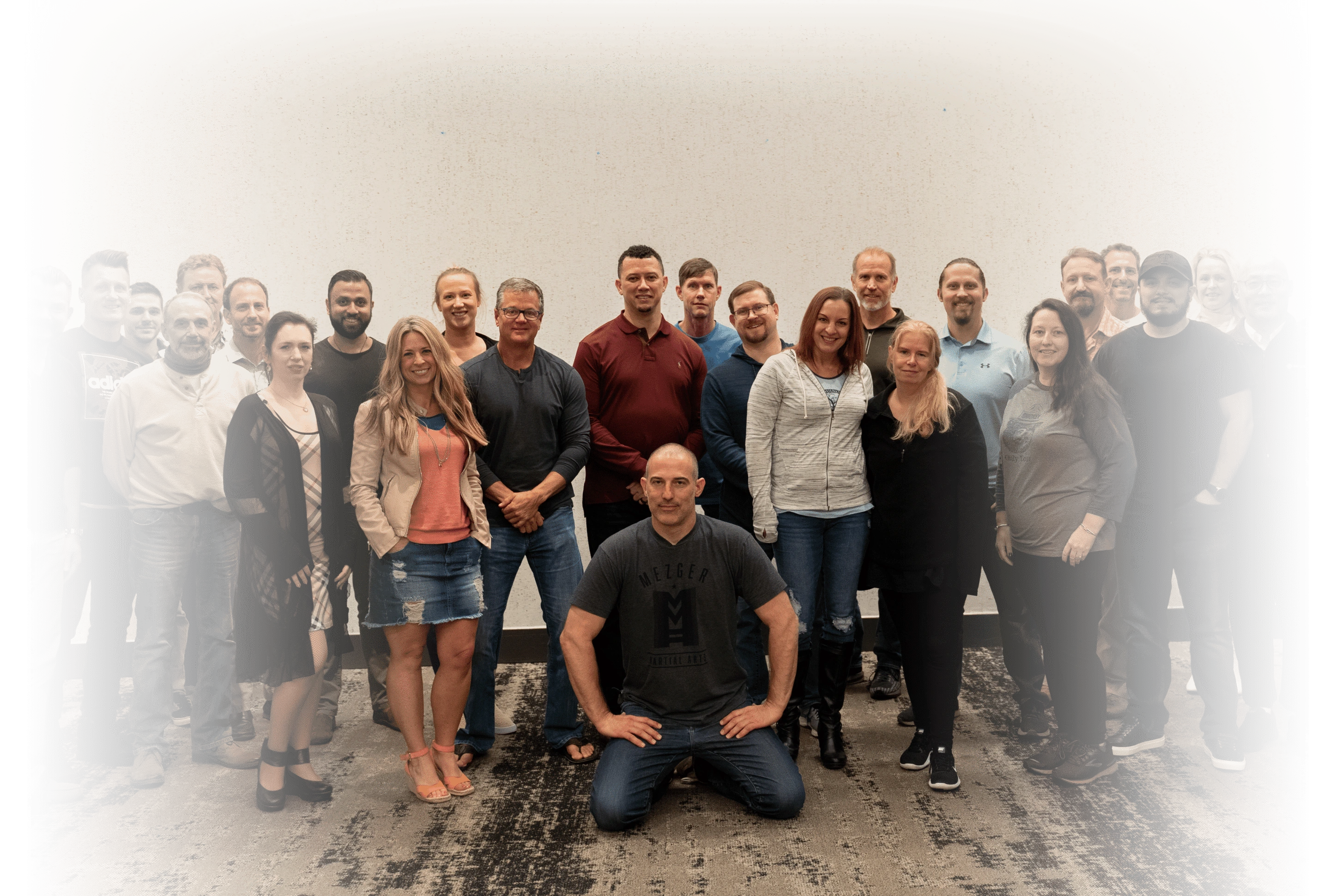
By 2017, the pattern was undeniable. Patients were flying in from around the world. Others were driving eight hours in a single day for a brief appointment. Many had tried everything before arriving at his office. Acupuncture. Functional medicine. Conventional care. Other chiropractors.
They were sick before meeting Dr. Goldman, but then they improved.
That raised a larger question. If people had to travel across states and continents to access this work, what did that say about the profession as a whole?
He decided the solution was not to expand his clinic. It was to teach.
“I said to myself, how many chiropractors or any doctor or healer of any type have people flying into them from 30 different places around the world?” he reflected. “So in 2017, I opened Zone School of Healing.”
Zone School was designed to be accessible to any healer. Chiropractors, medical doctors, acupuncturists, naturopaths, and homeopaths. The method was not limited to one license. It was built around principles.
The core of the program is online. Practitioners receive immediate and lifetime access to more than sixty hours of training. Live seminars in cities such as Hawaii, Amsterdam, Fort Lauderdale, Boston, and Toronto are offered as an extension, not the foundation.
“The way to learn is the online program,” he explained. “The in-person events are a beautiful bonus, but the online program is the way to learn.”
But what makes Zone School different is not just accessibility. It is structured.
Only about ten percent of the curriculum focuses on the hands-on technique. The other ninety percent addresses something most clinical programs avoid entirely.
The philosophy behind healing itself.
The 90 Percent Most Chiropractic Doctors Never Learn
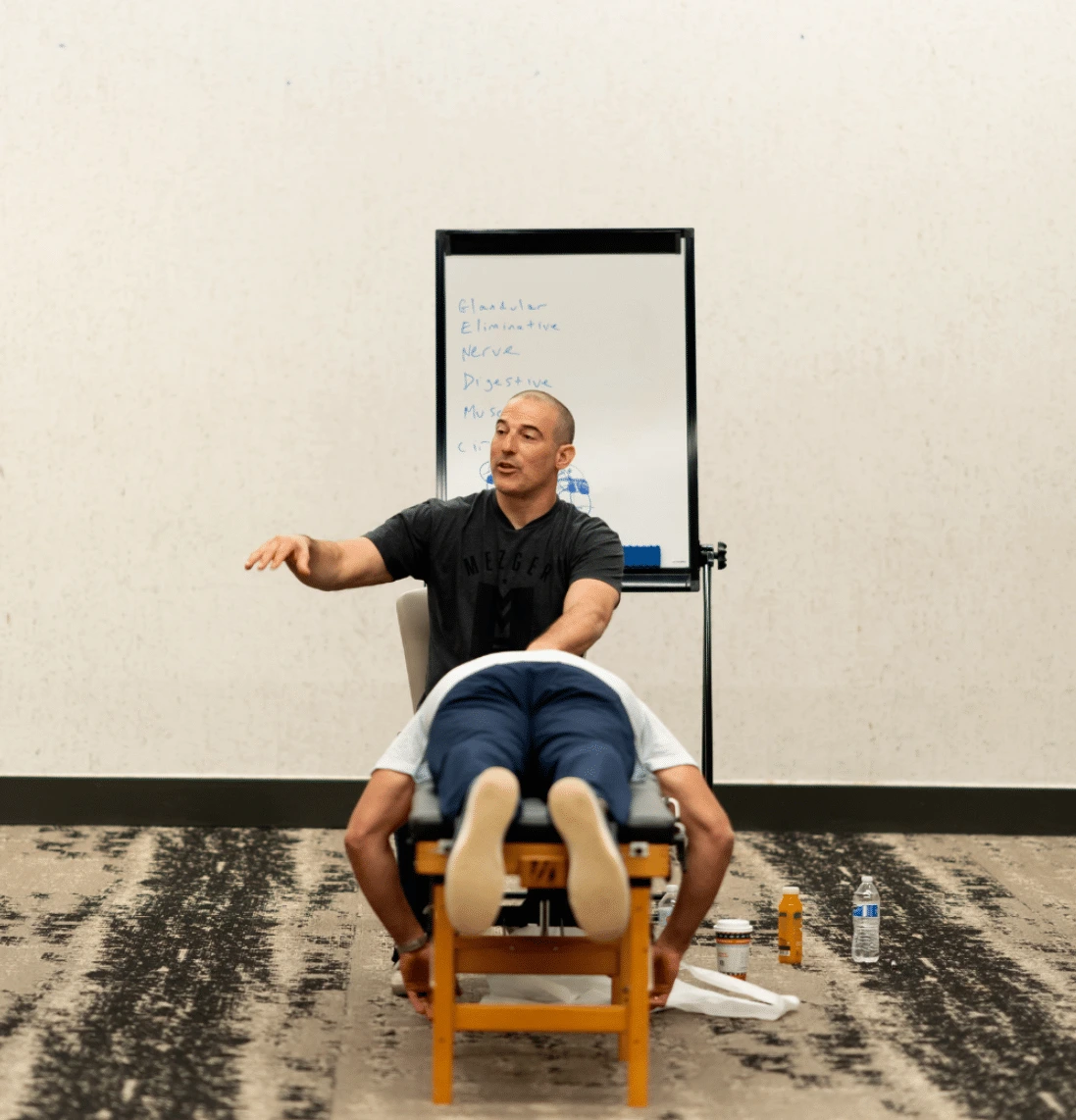
Most clinical education focuses on tools. The techniques, protocols, and procedures.
Zone School does not begin there.
Dr. Goldman makes it clear that only a small portion of his teaching is the hands-on method itself.
“I would say 10 percent of what I teach is what's called the zone technique,” he explained. “90% of what I teach are high-level metaphysical principles, which are not taught anywhere else that I know of, high-level metaphysical principles that, when understood, make people understand what heals, why people heal when they heal, why people don't heal when they don't heal, and how this principle can be tapped into?”
For many practitioners, that statement alone creates tension. Chiropractic schools, medical schools, and functional medicine programs are rooted in anatomy, physiology, and measurable intervention. They teach what to do.
Zone School begins with why healing happens at all.
He often uses electricity as a metaphor.
“Electricity is a great unknown,” he said. “We don’t really understand it in its essence. But we know how to use it.”
You do not need to fully comprehend electricity to plug in a heater and warm a room. But if you interact with it incorrectly, you can cause harm.
He sees healing in a similar way.
There is a power that heals, whether someone calls it energy, God, biology, or something else. The name is less important than the laws that govern it. According to his teaching, if a practitioner understands those laws and applies them correctly, healing follows more predictably. If they misunderstand those laws, the results are inconsistent.
This is where his philosophy moves deeper.
He believes that subconscious concepts held by a patient are expressed through the body.
“The subconscious concepts that one has, which are subconscious because they don't know what they are—they're below conscious, and that’s what's manifesting in the cells in their body,” he explained.
If a healer can identify and shift those underlying concepts, the physical manifestation changes.
This perspective challenges both traditional chiropractic and conventional medicine. It asks practitioners to move beyond structure and into meaning, beyond symptoms and into patterns.
It also explains why he believes results can improve dramatically when these principles are understood.
For some doctors, that idea is uncomfortable. For others, it is clarifying.
Either way, it demands a change.
The Challenge of Telling Chiropractors They Can Do Better
If the results are stronger, the question becomes simple. Why is everyone not doing this already?
The answer is not technical. It is human.
Dr. Goldman understands that most chiropractors work hard. They care about their patients. Many run successful practices helping people with neck pain, back pain, and structural issues. He is not dismissing that skill set.
In fact, he often acknowledges their competence.
The tension arises when discussing systemic results.
“I would say most chiropractors are probably pretty good at neck and back pain,” he explained. “And I’d say when it comes to most chiropractors, they’re probably pretty bad at systemic stuff.”
That statement is not easy to hear.
If he softens the message too much, the urgency disappears. If he pushes too hard, practitioners feel attacked. Finding the balance is part of his ongoing challenge.
He put it plainly.
“My challenge is just getting them to accept that without offending them,” he said.
The goal is not to diminish what chiropractors already do well. It is to expand what they believe is possible.
He frames it this way: if a chiropractor is already competent at musculoskeletal care, Zone School can make them exceptional. If they feel uncertain when treating systemic issues, Zone School can give them confidence and structure.
“You are pretty good at neck and back pain, you’re going to be amazing,” he explained. “You are not that good at systemic stuff, you’re going to be amazing.”
This is where the transformation shifts from patient to practitioner.
The before is a chiropractor who feels limited to musculoskeletal cases. The after is a practitioner who understands systemic healing principles and applies them with clarity.
The stakes are not small. They involve professional confidence, patient outcomes, and the future direction of an entire field.
And for Dr. Goldman, that is worth navigating discomfort.
What Chiropractors and Holistic Practitioners Experience After Joining Zone School
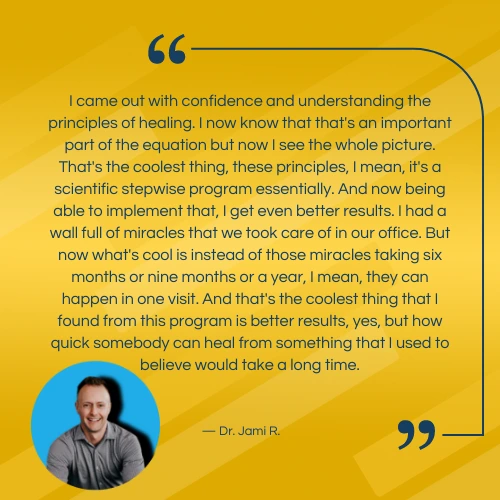
The most telling transformation is not what happens in Dr. Goldman’s clinic. It is what happens in the clinics of the doctors he teaches.
Since launching Zone School of Healing in 2017, he has trained thousands of chiropractors and other practitioners. Many join early in their careers. Others come after decades in practice.
The most powerful feedback often comes from the veterans.
He shared a pattern he hears repeatedly.
“Pete, joining Zone School was the best decision of my healing career,” he recounted.
But what affects him most are the seasoned practitioners who believed they had already seen it all.
“Dr. Pete, I’ve been practicing chiropractic for 44 years… I joined Zone School two years ago. And in the last two years, I’ve helped people I never could have helped ever. I do things I never could have done before,” he recalled hearing.
That is not a new graduate searching for direction. That is a chiropractor with four decades of experience saying something shifted.
The transformation is not simply financial. It is clinical confidence.
Before Zone School, many practitioners felt strong when addressing musculoskeletal pain but uncertain when faced with autoimmune disorders, endocrine issues, or chronic systemic conditions.
After learning the principles and method, they report clarity. They report consistency. They report cases improving that previously would have been referred out or managed conservatively.
For Dr. Goldman, this is the real metric of success.
He is not focused on legacy or recognition.
“I don’t care about legacy at all,” he stated plainly. “I have aspirations to grow Zone School hugely and help the chiropractic profession and help any doctor or healer be a better doctor or healer.”
The emphasis is not on personal fame. It is an expansion of capacity within the profession.
That distinction matters.
The Vision to Reshape an Entire Profession
Neck and back pain matter. That will not change.
But if chiropractic began as a system to restore organ function and overall health, then limiting it to musculoskeletal complaints may leave potential untapped.
Dr. Goldman’s work through the Zone School of Healing invites a broader conversation.
Not about abandoning current practice.
But about asking whether the profession has settled for less than it was meant to be.
For chiropractors and holistic practitioners reading this, the real question is personal.
Are you satisfied with what you can currently help with?
Or are you ready to expand what is possible?
MBNews highlights professionals who challenge their own industries and open new conversations in healthcare.
If you are a chiropractor or holistic practitioner exploring how to deepen your impact, continue learning about systemic healing. And if you know a practitioner reshaping the future of healthcare, apply to be featured in an upcoming MBNews story.

